


High-Performance Storefronts
Built With Alokai & Odoo
Unlock better performance, scalability, and customer experience with storefronts built on Alokai (former Vue Storefront) and powered by a tightly integrated Odoo backend.

 Official Alokai & Odoo Partner
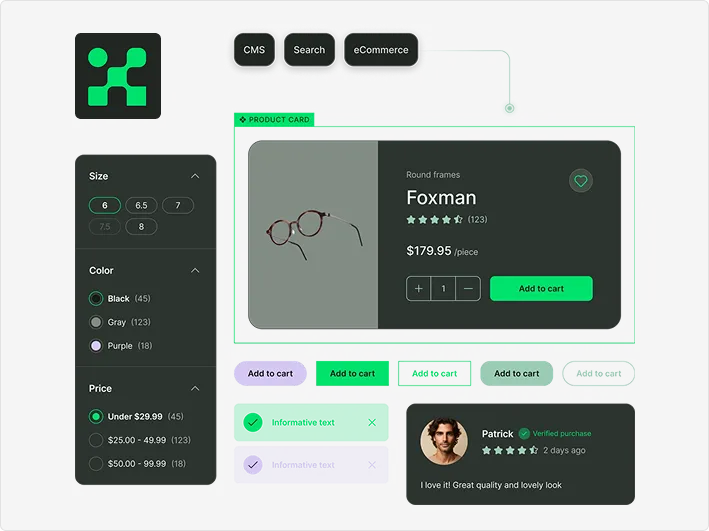


What Is Headless eCommerce and Why It’s Worth the Move?
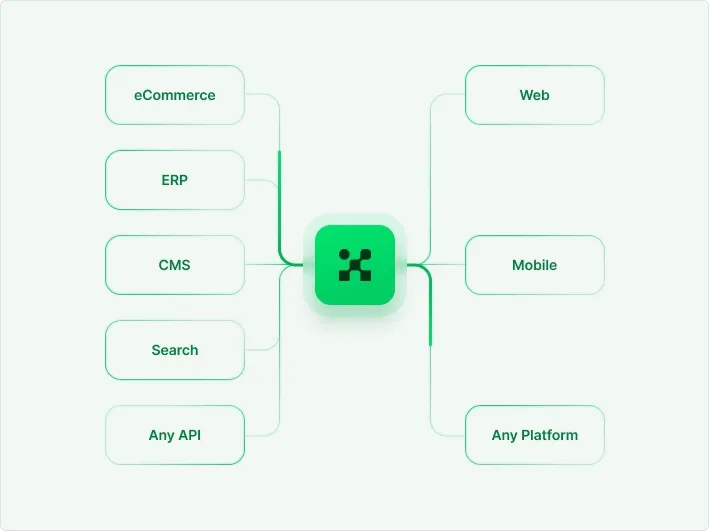
Flexible, Future-Proof Architecture
Most traditional eCommerce platforms bundle the frontend and backend together, forcing you into rigid systems that limit performance, flexibility, and customization.
Headless commerce changes that by decoupling the storefront from the backend. This gives your team full control over the customer experience — from design and UX to speed and functionality.
With the frontend running independently, you can move faster, experiment more, and create high-performing experiences without backend bottlenecks slowing you down.
It’s a modern, scalable approach built for brands that want to stay agile, optimize conversions, and grow without compromise.
Why Successful Brands
Choose Alokai
Alokai is built for ambitious eCommerce brands that have outgrown the limitations of traditional platforms. When paired with Odoo, it delivers fast, flexible, and scalable storefronts without the usual backend headaches.
It’s the future-proof stack for teams that want total control, better performance, and the freedom to grow without compromise.
From better site speed and conversion rates to lower maintenance overhead, this integration helps you scale operations while delivering exceptional customer experiences.
Official Alokai & Odoo Partner
 Built to Scale with Your Growth
Unlike many eCommerce platforms that struggle as your business expands, our Alokai + Odoo integration is built for high-traffic brands. As your store grows, performance stays fast and stable — no compromises.
 Lightning-Fast, Headless Storefronts
Alokai acts as a modern, headless frontend that runs independently of your backend. That means blazing-fast load times, improved SEO, and better conversion rates — even while Odoo handles complex backend operations.
 Speed Boost with Redis Caching
We leverage Redis caching to ensure your storefront pulls data instantly from Odoo. This dramatically improves responsiveness, reduces load time, and creates a seamless user experience across every device.

Forget clunky third-party connectors. Our system connects directly to Odoo in real time — eliminating the syncing delays, errors, and frustrations you’d get with Shopify, Magento, or WooCommerce.
How Alokai & Odoo Work Together
We connect a centralized Odoo backend to a scalable Alokai frontend, giving you fast, flexible storefronts powered by a reliable, unified backend.
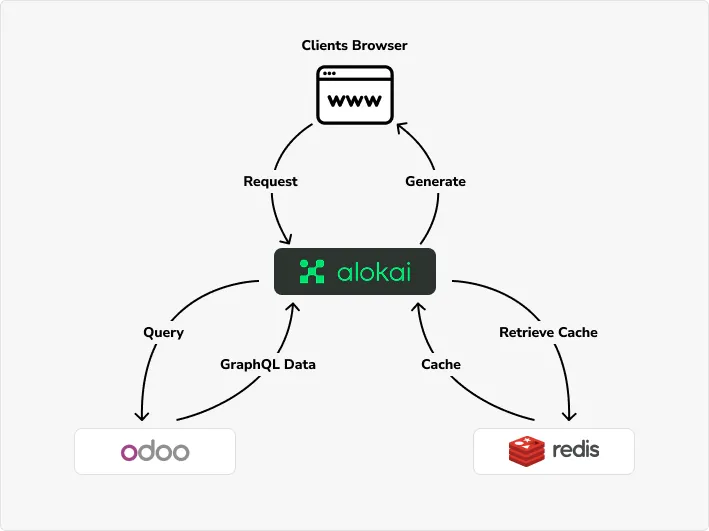
Seamless Frontend-Backend Integration
Alokai handles the customer-facing experience, while Odoo powers the backend. When a user visits your store, Alokai fetches data from Redis for speed or pulls live data from Odoo using GraphQL.
This setup gives you fast, flexible storefronts while keeping everything managed in one place. Developers can update the frontend without touching backend systems, making it easier to scale and adapt.
With Redis caching and centralized data from Odoo, you get a modern, reliable setup built for performance and growth.
Customer Success Stories
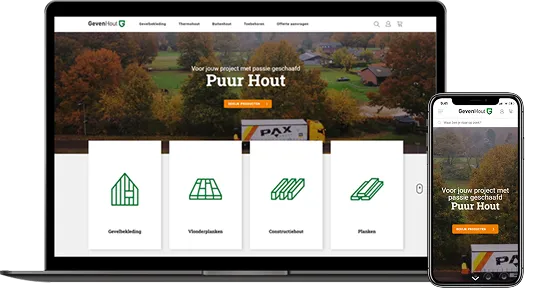
See how innovative retailers improved performance, boosted mobile conversions, and future-proofed their eCommerce with Alokai + Odoo, all delivered by ERPGAP.

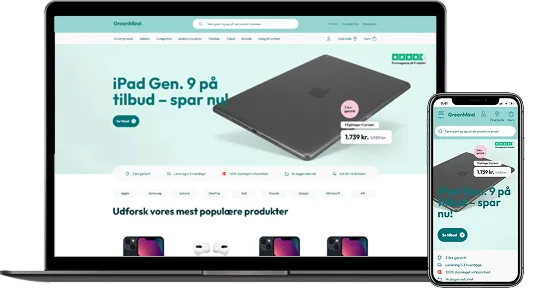

Why Leading Brands Choose ERPGAP
We help e-commerce businesses build faster, more flexible storefronts using Alokai — fully integrated with Odoo. Our clients see measurable results: faster load times, smoother operations, and higher conversion rates. We bring deep experience, reliable processes, and a business-first mindset to every project.
Official Alokai & Odoo Partner
 Alokai + Odoo Expertise
Since 2010, we’ve delivered integrated solutions that connect best-in-class frontends with powerful backends. As official partners of both Alokai and Odoo, we know exactly how to align performance with operational control.
 Built to Scale
We design storefronts that load in milliseconds and scale effortlessly. Whether you're expanding product lines or entering new markets, our modular setups grow with your business — without requiring full rebuilds.
 A Long-Term Partner
We don’t just launch and leave. From onboarding and QA to performance tuning and feature rollout, we support your growth journey with reliability and proactive communication.
 Conversion-Driven Approach
Every decision — from performance optimization to layout strategy — is guided by one goal: to increase your conversions. Faster UX, better SEO, fewer blockers at checkout. It all adds up to more revenue.
Frequently Asked Questions
Yes. Alokai is built on Nuxt.js, which allows better control over how pages are rendered, assets are served, and bundles are optimized. This results in faster load times, smoother navigation, and improved user experience compared to the default Odoo eCommerce frontend.
It depends on the size and complexity of your project. Most implementations take between 3 to 8 months, including setup, customization, testing, and go-live.
Alokai scales much better. The Nuxt.js app is lighter and easier to deploy, whether on Google Cloud Run, Cloudflare, or Kubernetes clusters. You can achieve higher scalability at a lower cost than scaling Odoo’s native eCommerce frontend, since Odoo is an ERP system with more complex server requirements.
Both. Alokai works perfectly for B2B, B2C, and even marketplace setups, if you wish to expand into that model.
No. Alokai uses Odoo’s default data model, so if your Odoo server is not heavily customized, the migration is straightforward. Even with customizations, your back-office operations remain unaffected.
It’s highly customizable. However, the best ROI comes from reusing existing components where possible, as heavily reinventing components can require more effort to maintain performance.
Yes. Alokai’s composable architecture allows you to integrate with external systems such as headless CMS platforms, review systems, search providers, and live chat tools, giving you full freedom to choose the best tools for your business.
Most payment providers available in Odoo are compatible with Alokai, including Adyen, PayPal, PayPal Fast Checkout, Stripe, Apple Pay, and more.
Technical Notes
Why Alokai (Nuxt.js) Outperforms Odoo’s Native Frontend
Rendering Strategy
Nuxt.js supports Server-Side Rendering (SSR), Static Site Generation (SSG), and hybrid rendering, allowing you to optimize delivery for speed, SEO, and caching. Odoo’s eCommerce frontend relies heavily on dynamic server-rendered pages, which means more load on the ERP server for every request.

Asset Optimization
With Nuxt.js, JavaScript and CSS are bundled and tree-shaken automatically, reducing payload size. Odoo serves larger, more monolithic bundles with less fine-grained optimization.

Edge Delivery
Nuxt apps can be deployed to CDN-edge networks like Cloudflare Pages or Vercel, meaning content is served geographically closer to the user. Odoo’s frontend can be cached at a CDN, but the dynamic nature of the ERP limits this.
Decoupled Architecture
The storefront runs separately from the ERP backend. This means you can scale the frontend independently and cheaply (Cloud Run, Kubernetes, Vercel, Netlify, etc.) without having to add costly Odoo workers.

Reduced ERP Load
Because most pages are pre-rendered or cached at the edge, your Odoo server processes far fewer HTTP requests, freeing up resources for core ERP operation.
Customisability with Maintainability
Nuxt components are modular and follow modern frontend development standards, making it easier for developers to extend functionality without diving deep into Odoo’s QWeb templates.
Ready to Scale Your Storefront?
Let’s talk about how we can help you modernize your eCommerce experience with Alokai & Odoo and unlock faster performance, better UX, and higher conversions.
Official Alokai & Odoo Partner